










Holes at the sock heel are the most common problem when knitting socks, and at the same time one of the easiest to solve! Whether you knit a standard heel or a boomerang heel knit, these tips will keep holes a thing of the past.
Why do holes form at the heel?
Holes form at the transitions: where the heel flap meets the instep (on a standard heel) or where you turn (on a boomerang heel). At these points the yarn is stretched across a "gap" and a visible hole forms.
5 tips against holes in the heel
1. Pick up an extra stitch and knit it together through the back loop
The most effective trick for the standard heel: when picking up the gusset stitches, pick up one additional stitch from the horizontal thread between heel flap and instep. In the next round, knit this stitch together through the back loop. This closes the gap completely.
2. Tighten the first stitch after turning
When you turn at the heel, pull the first stitch especially firmly. Slip it purlwise and pull the yarn firmly. This stops a gap forming at the turning point.
3. Edge stitches as chain edge
Knit the heel flap with a chain edge (slip the first stitch knitwise, knit the last stitch). This gives neat, large edge stitches from which you can pick up stitches more easily later, without holes.
4. Pick up stitches two rows higher
Instead of picking up stitches exactly in the last edge stitch, you can insert the needle one stitch lower . This takes up the material slightly and prevents gaps.
5. Adjust the needle size at the heel
Use needles half a size smaller than for the rest of the sock. This gives a denser fabric exactly where it is under the most strain. Our needle size chart helps you choose.
Which heel has the fewest holes?
The boomerang heel (short-row heel) tends to be hole-free, because no stitches need to be picked up. Instead, you work short rows. However, it requires a bit more practice. Our boomerang heel pattern shows you every step.
The standard heel The standard heel is easier to knit and just as hole-free with the tips above. See our standard heel pattern .
The right yarn for socks
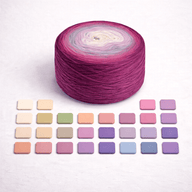
For hard-wearing socks we recommend sock yarn with polyamide content. With gradient yarn particularly beautiful colour patterns form on the heel: every sock becomes one of a kind!
