














Hand-knitted socks are among the most popular knitting projects – practical, individual and unbeatable as a gift. This pattern shows you step by step how to knit socks – from the cuff to the toe, with three heel techniques to choose from.

Materials and preparation
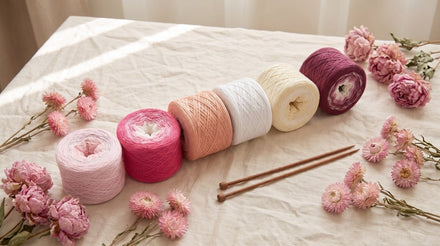
For a pair of socks in size 38/39 (UK 5–6) you need approx. 100 g of sock yarn (4 threads, length approx. 420 m/100 g) – for example our sock yarn from the Chiemseegarn shop. You will also need a set of double-pointed needles 2.5 mm (5 needles), stitch markers and a darning needle.
Gauge: 30 stitches × 42 rows = 10 × 10 cm in stocking stitch
Size chart for socks
| Shoe size | Stitches | Foot length | Leg length |
|---|---|---|---|
| 35/36 | 56 | 22 cm | 16 cm |
| 37/38 | 60 | 24 cm | 16 cm |
| 38/39 | 64 | 25 cm | 18 cm |
| 40/41 | 64 | 26 cm | 18 cm |
| 42/43 | 68 | 27 cm | 20 cm |
| 44/45 | 72 | 28 cm | 20 cm |
Pattern: knitting socks (size 38/39)
1. Cuff
Cast on 64 stitches and distribute them evenly across 4 needles (16 each). Join in the round – make sure nothing is twisted. Knit 3–4 cm in 2×2 rib (2 knit, 2 purl).
2. Leg
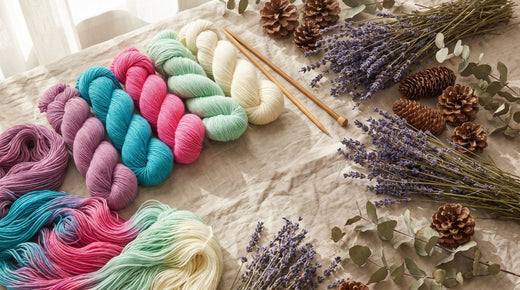
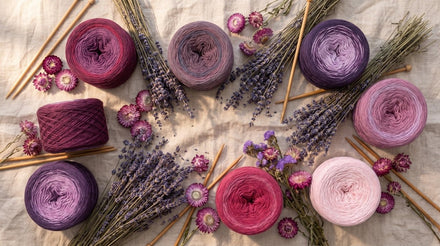
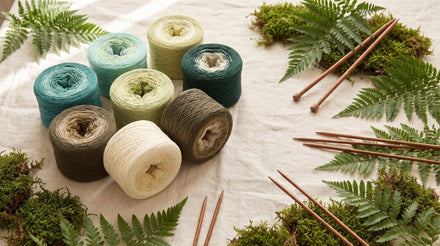
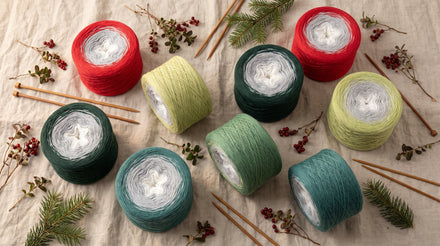
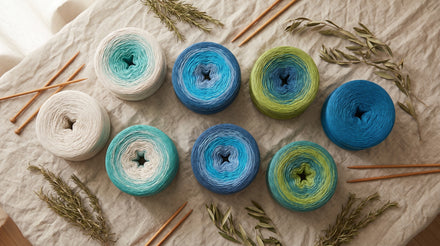
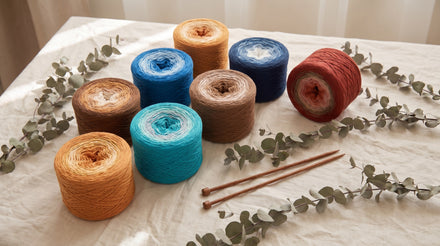
Knit the leg in stocking stitch for 16–18 cm. Gradient yarns look especially lovely here, as the colour changes happen by themselves as you knit.
3. Heel flap
You knit the heel only over needles 1 and 4 (= 32 stitches) in rows worked back and forth. Right-side row: slip 1 edge stitch, knit the rest. Wrong-side row: slip 1, purl the rest. Repeat for 32 rows (= 16 edge stitches per side).

Three heel techniques compared
Heel turn with flap (the classic for beginners)
Divide the 32 heel stitches into 11–10–11. Knit the middle section and take in one side stitch at the end of each row: knit 20 stitches, then knit 2 together. Turn, slip 1, purl 8, purl 2 together. Repeat until all the side stitches have been used up – 10 stitches remain.
Detailed pattern: Knitting a heel turn with flap
Boomerang heel (short rows)
The boomerang heel needs no heel flap and gives an anatomical fit. You knit across all 32 stitches, but in every row you leave one more stitch at the edge as a double stitch. Knit until only 10–12 middle stitches are left, then work the double stitches back in, round by round.
More on this: Knitting a heel without holes
Heart heel
An elegant variation of the heel turn with flap, with offset decreases. The result is a decorative heart pattern on the underside of the heel and a particularly good fit.
4. Picking up the gusset stitches
After the heel turn with flap, pick up one stitch from each edge stitch of the heel flap (16 per side). In the next rounds, decrease evenly until you are back at 64 stitches.
5. Knitting the foot
Continue in stocking stitch until the foot measures approx. 19 cm from the heel (size 38/39). For the toe you will need about another 6 cm.
6. Band toe
Decrease in every 2nd round: on needles 1 and 3, knit 2 together at the end of each; on needles 2 and 4, slip 1 – knit 1 – pass the slipped stitch over at the beginning of each. Repeat until 8 stitches remain. Pull the thread through and weave in the end.
Tips for perfect socks
- Reinforcement: knit the heel and toe with a reinforcing thread for greater durability
- Colour gradient: with gradient yarns from Chiemseegarn your socks become one-of-a-kind pieces
- Second sock: start at the same point in the colour gradient for identical socks
- Material: at least 20% polyamide for hard-wearing socks – our sock yarn has the perfect blend
Discover more patterns
Browse our other free patterns and techniques:
