

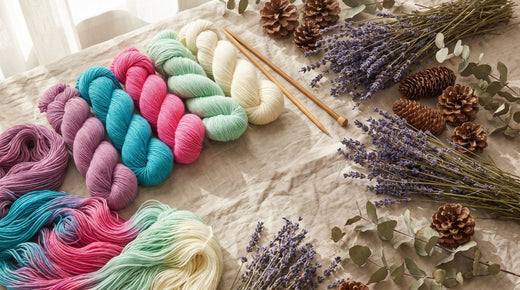
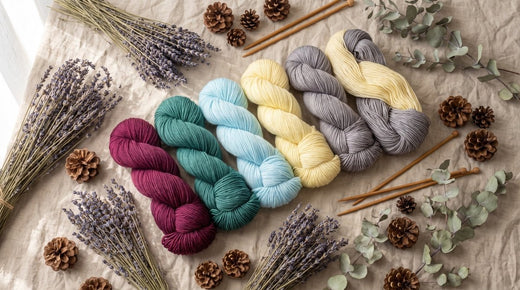
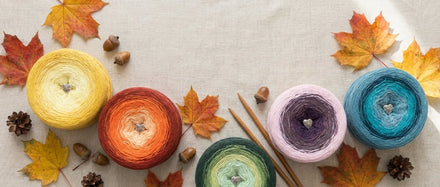
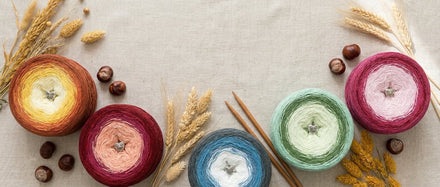
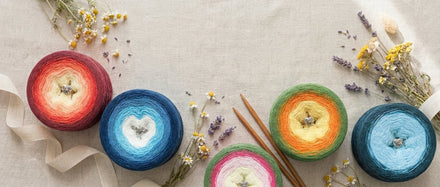
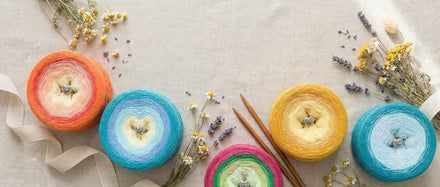
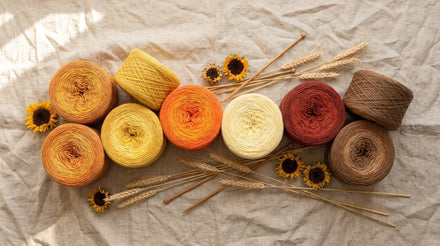
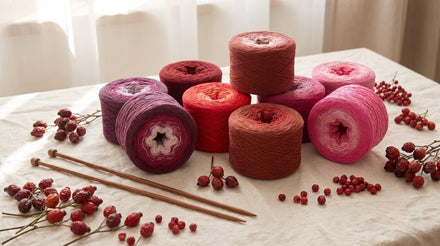
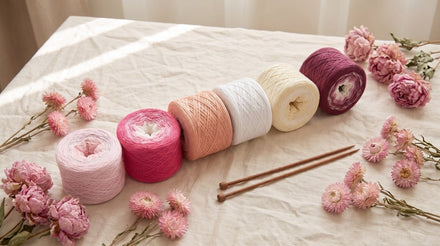
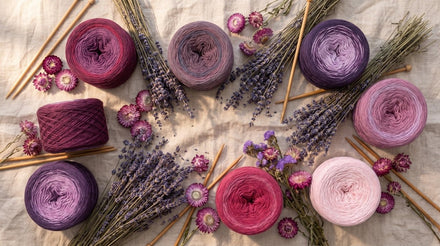
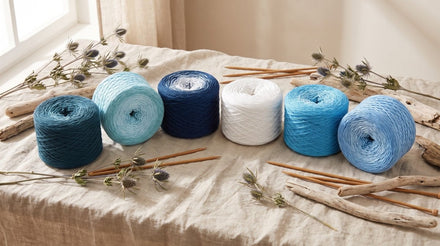
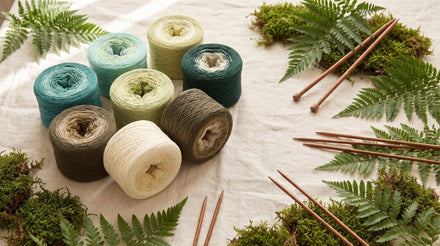
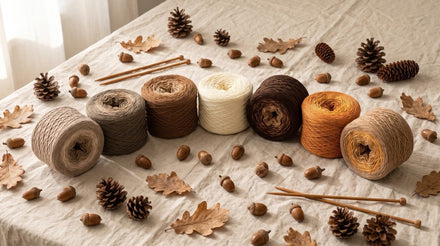
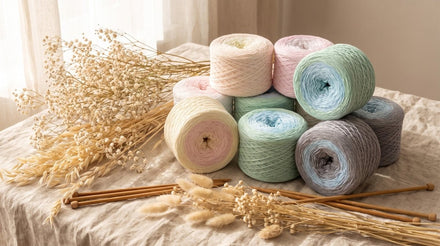
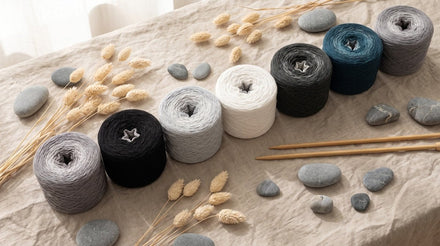



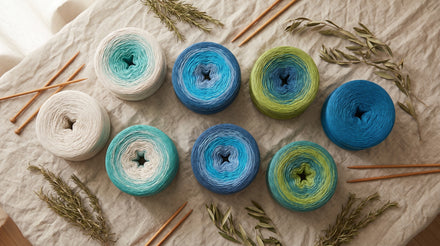
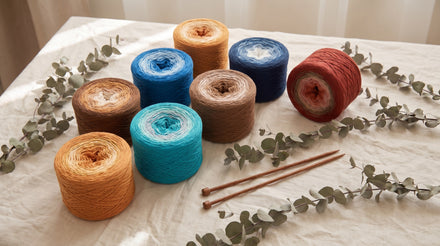

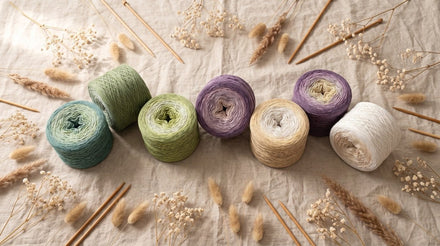
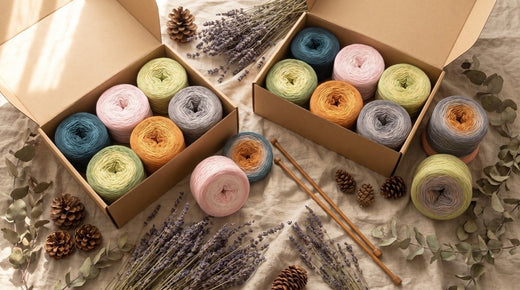
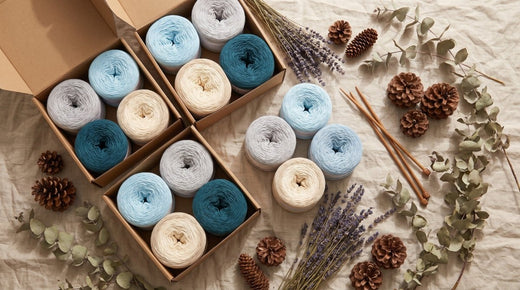
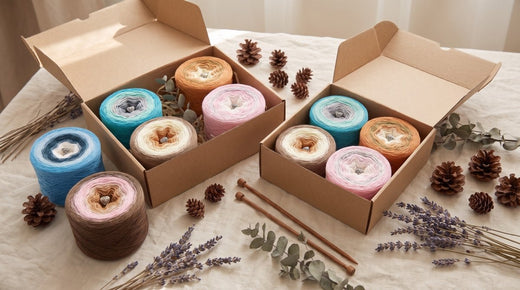
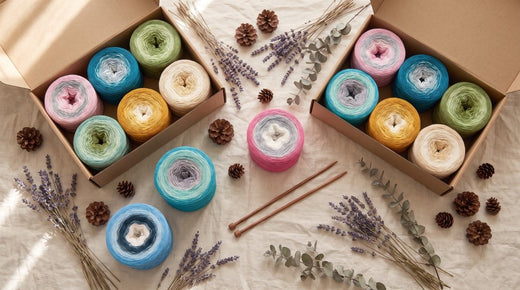
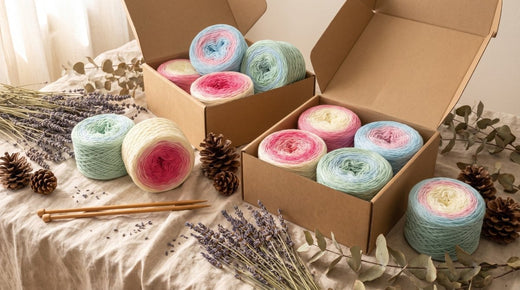
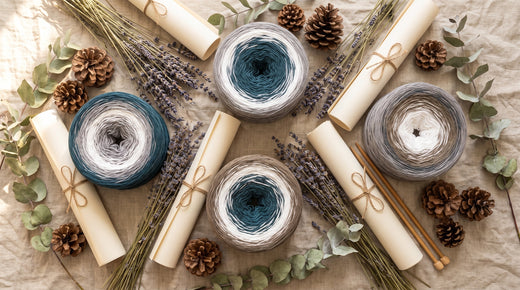
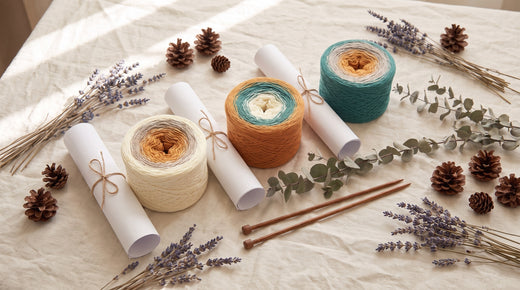
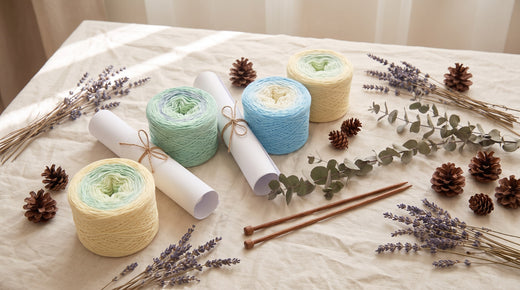
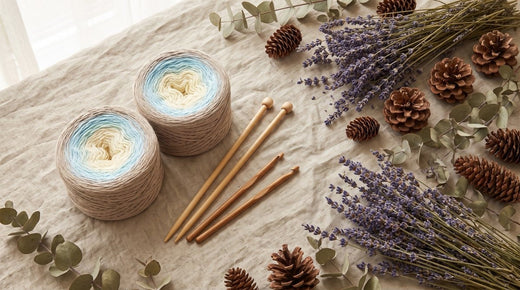


A knitted blanket is a labour of love: it keeps you warm, decorates your home and makes a wonderful gift. And best of all, you don't need complicated patterns! With gradient yarn a fascinating colour gradient develops all by itself while you simply work knit and purl stitches.
Which size for which blanket?
| Use | Size (approx.) | Yarn requirement |
|---|---|---|
| Baby blanket | 80 × 100 cm | 400-500g |
| Snuggle blanket (sofa) | 120 × 150 cm | 800-1000g |
| Bedspread (bed) | 150 × 200 cm | 1200-1500g |
Check the exact yarn consumption with our yarn consumption table.
Instructions: simple knitted blanket
Material
- yarn in the quantity you need – needle size guide
- Long circular needle (80-120 cm cable length), because the stitches won't fit on straight needles!
- Optional: stitch markers every 20-30 stitches for counting
Step 1: Casting on
Calculate the number of stitches with our stitch calculator. Example: at 20 stitches = 10 cm and a width of 120 cm, you need 240 stitches.
Tip: Cast on generously. A blanket may well be a little wider than planned.
Step 2: Edge stitches & pattern
To stop the blanket from curling, you need a border:
- Garter-stitch border: Knit the first and last 5-8 stitches of every row in garter stitch (= always knit, including on the wrong-side rows)
- Plus: Also knit the first and last 5-8 rows entirely in garter stitch
You can knit the middle section in your favourite pattern. For beginners we recommend stocking stitch or seed stitch.
Step 3: Knit, knit, knit
A blanket is a marathon, not a sprint! Allow several weeks. With gradient yarn you can follow your progress in the changing colours, which is motivating!
Step 4: Binding off & finishing
Bind off loosely (use a larger needle!) or use the stretchy bind-off method. Weave in the ends, wash gently, pin into shape, done!
Tips for the perfect knitted blanket
- Anti-curl: Without a garter-stitch border, stocking stitch curls in. Always plan a border!
- Colour gradient: With Pastel tones create gentle transitions, with strong colours create dramatic effects
- Patchwork variant: Knit individual squares and sew them together. This lets you combine different patterns and colours.
- Weight: A large knitted blanket becomes heavy (1-2 kg), and the fabric sags. Knitting more firmly helps!
More home projects: Knit cushions | Cowl scarf | Knit a poncho
